Introduction
Having a rare skin disease like epidermolysis bullosa can be overwhelming. The skin is fragile and even the slightest touch can cause painful blisters. If you or a loved one suffers from the condition, the daily care becomes a full-time commitment.
But here’s the good news: With the right strategies to put into place at home, you can improve your comfort, stave off complications, and build confidence in managing the condition. In this guide, we’ll break down practical steps, expert tips and proven methods that will help ensure you deal with everyday challenges the best way possible.
We’ll also highlight some insights from the various medical research, share some hint of lifestyle tweaks and see how care approaches compare. Whether you are a parent, caregiver, or patient, this article is your step-by-step guide to safe and effective epidermolysis bullosa management.
Managing daily challenges matters too. Tips for coping with type 2 diabetes fatigue and a routine to reduce arthritis knee flare-ups can improve comfort. Also, untreated atrial fibrillation can raise stroke risk, making timely care vital.
Understanding Epidermolysis Bullosa
What Is It?
A group of genetic skin disorders is called epidermolysis bullosa (EB). It makes your skin fragile. Small friction, rubbing or heat can blister. The disease has various forms ranging from a mild one to one that is life-threatening.
Why It Happens
EB occurs because of mutations in skin structure (genes). These genes aid the anchoring of the outer and inner layers of skin. When faulty, though, the skin just couldn’t hold up and blistered.
Types of EB
- EB Simplex: Simplex or Simplex Syndrome, so-called; majorly common, so is usually mild.
- Junctional EB: moderate to severe, mucous membrane
- Dystrophic EB: Severe; scarring and deformities found.
- Kindler Syndrome: Rare, Mixed features of types of EB.
Although each type has its own challenges, the basic issue is the same: fragile skin that must be cared for for the rest of the person’s life.
Why Home Management Matters
Hospitals to treat in an emergency but for day-to-day life, it depends on you. Home care helps prevent infection, minimize pain and enhances the quality of life.
With proper routines, you can:
- Reduce blistering.
- Speed up wound healing.
- Minimize risk of infection.
- Help emotional health.
Without appropriate home care, instances of infections, malnutrition and anemia can occur.
Daily Skin Care Routine
1. Gentle Cleaning
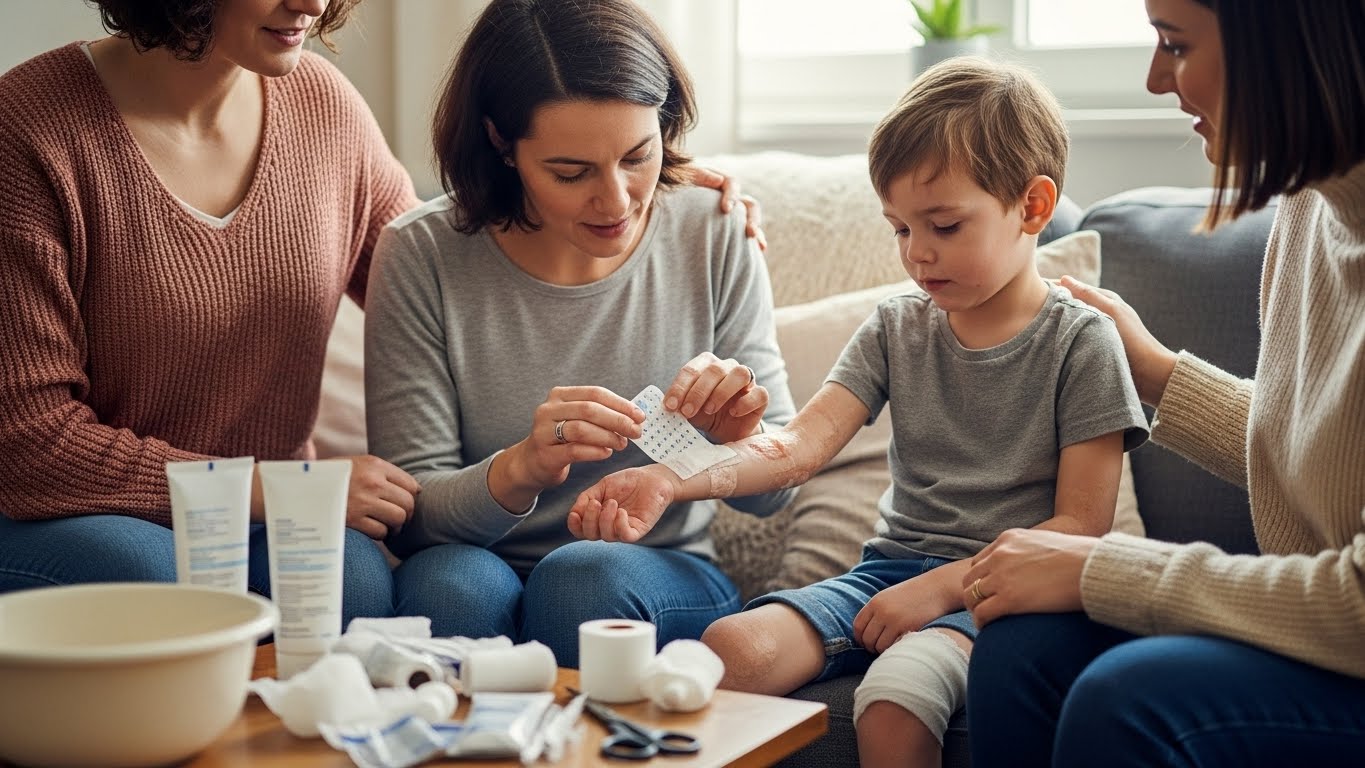
Use lukewarm water and mild, nonfragrance, cleansers. Avoid scrubbing. Receive the body of water through dry towels soft.
2. Wound Dressing
- Choose non-stick, silicone based dressings.
- if prescribed, apply topical antibiotics
- Keep wounds wet to encourage healing.
Pro Tip: Apply petroleum jelly along the edges of any dressings to reduce the amount of friction.
3. Blister Management
- Sterilize a small needle.
- Pierce the side of large blisters in order to drain fluid.
- Don’t open the roof of the blister – it helps to keep skin from developing.
4. Pain Control
Over-the-table pain relievers such as acetaminophen or ibuprofen can be helpful. In severe cases, see your doctor for stronger options.
Treatments may bring side effects. Be aware of neuropathy from prolonged chemotherapy and explore autoimmune pancreatitis treatment in children to support better care choices.
Protecting Skin from Injury
Clothing Choices
- Wear soft cotton or silk clothes
- Avoid seams and rough edges.
- Wear clothes that have no tags to avoid irritation.
Environmental Adjustments
- Keep the temperature of the room cool.
- Use padded bedding to avoid the development of pressure sores.
- Do not expose to extreme temperature variations.
Activity Modifications
Teach children to play gently. Swimming is a safer activity than running. do not play sports that have a lot of friction.
Nutrition for Healing
Nutrition heals and immunity is enhanced. Diet becomes an essential part in dealing with patients suffering from EB since their blisters decrease the accessibility of their mouth to the diet food.
Foods to Include
- Protein: Eggs, lean meat, dairy products, beans
- Iron rich foods: Spinach, iron-fortified cereals, beans.
- Vitamin C: Peppers (bell pepper), berries, oranges, and lemons.
- Foods rich in zinc: Nuts and seeds, seafood
Eating Tips
- Soft and easily swallowed foods should be served.
- Offer small, frequent meals.
- Spicy food, acid food and hard foods should be avoided.
Research from the National Institute of Health shows that poor nutrition exacerbates wound healing and embarrassment from infection in EB patients.

Emotional & Social Support
Living with EB is more than just skin deep. It is also affecting mental health and relationships.
- Try to discuss feelings in an open way.
- Join EB support groups (e.g. DEBRA International).
- Train teachers and fellow students about the condition.
Useful assistance is key to reduce seclusion and increase self-confidence for both child and adult.
Related Health Topics (For Deeper Understanding)
While rare are seldom the same, often the challenges overlap for everyone. Understanding them helps caregivers better prepare for them.
- Early symptoms of hereditary angioedema in adults include swelling in the skin or the abdomen or throat. Like EB, this needs to be acted on quickly to prevent complications.
- A Guillain-Barre syndrome diet is used for recovery by emphasizing nutrients rich foods that aid in strengthening the nervous system.
- The causes of Wilson’s disease provide insights into ways in which genetic factors interfere with copper metabolism in the same way that EB genes interfere with skin stability.
- Autoimmune pancreatitis in children also requires careful, lifelong management–like EB’s every day care.
- A stiff-person syndrome overview reveals how rare diseases affect mobility and independence.
- Common Ehlers Danlos syndrome symptoms – such as fragile skin and joint problems – overlap with EB challenges.
These examples demonstrate that rare diseases have one thing in common: structured home care and support.
Advanced Wound Care at Home
Daily dressing is essential, but of course, advanced techniques mean a big difference.
Moist Healing Environment
Studies show wounds heal more quickly in wet climates. Try using hydrogel or silicone-coated dressings to help keep them hydrated.
Layering Technique
First you will use a non-stick dressing. Add in soft banding, then secure with tubular bandages. Avoid adhesive tapes — they damage skin.
Infection Prevention
- Wash hands prior to touching wounds.
- Use sterile gloves, if available
- Apply topical antibiotics – if prescribed, only on a needed basis but not routinely.
- Watch for signs of infection: redness, swelling, pus or fever.
Tip: Switch up dressing brands every once in a while. Some patients have a sensitivity to certain materials.
Managing Infections at Home
EB patients are extremely susceptible to infection. Even a small blister can be dangerous.
Warning Signs
- Yellow or green discharge.
- Foul odor.
- Increased pain or warmth.
- Fever or chills.
What To Do
- Clean wound carefully using the saline.
- Apply prescribed cream.
- Cover with sterile dressing.
- Seek urgent medical help if the fever is still present.
Avoid the overuse of antibiotics. Overuse can produce resistance being more difficult to infect in future infections.
Staying healthy starts with awareness. Learn about lifestyle changes to prevent Alzheimer’s disease, the first symptoms of Parkinson’s disease, and the early signs of thyroid cancer in women to catch problems early.
Oral and Dental Care
Mouth blisters which make eating painful. Teeth and gums can also become weakened.
Oral Care Tips
- Use extra-soft toothbrushes.
- Rinse with salt water post meals
- And avoid alcohol-based mouthwash – it stings.
Dental Visits
Visit a dentist who is familiar with EB regularly. Some patients require fluoride treatments or protective coatings.
Pain and Itch Control
Chronic pain and itching have an impact on daily life. A good plan is one by which suffering is reduced.
Options for Pain
- Mild: Acetaminophen.
- Moderate: Ibuprofen.
- Strong (prescription Opioids): Prescription Opioid (doctor prescribed)
Itch Relief
- Moisturizers Prevent Dryness
- Antihistamines are used if you have allergies that cause itching.
- Cold compresses bring temporary relief.
Always consult with a health care provider to discuss long-term medication.
Home Safety Adjustments
Your house has a role to play in care. Injuries are avoided by making small changes.
Bedroom
- Added suggestion: Use silk sheets to lessen the friction.
- Protect sharp corners of furniture.
Bathroom
- Install soft floor mats.
- Gentle showerheads can be used for washing.
Living Area
- Maintain cool airflow.
- limit contact with pets which cause scratching.
These changes reduces the chances of accidental injuries and blisters.
Physical Therapy & Mobility
Some types of EB result in stiffness and scarring to joints as well. Regular therapy helps to maintain movement.
- Stretching breaks down contracture.
- Hydrotherapy (the exercise of water body) is safe and low impact.
- Splints – Splints can be used to prevent deformities of the fingers or joints.
Consult a therapist who specializes in rare genetic conditions.
School and Workplace Tips
With support, children and adults with EB can lead active educational and careers lives.
For Children
- Selder F. Chronicles of the Early Grantha: Let teachers know the care of EB
- Plan to have an additional block of time between classes.
- If blisters get any worse, have a secure resting place.
For Adults
- Request flexible work hours.
- Select jobs that do not require excessive physical effort.
- Use ergonomic tools to lower the stress of skin.
Safe and inclusive environments are created through advocacy and education.

Pros & Cons of Home Management
With this in mind and to help build understanding of the relative strengths and challenges of EB care at home, please see the comparison below.
| Aspect | Pros | Cons |
|---|---|---|
| Daily Dressing | Prevents infection, promotes healing | Time-consuming, costly |
| Dietary Adjustments | Improves wound healing | Eating may remain painful |
| Safe Environment | Reduces injury risks | Requires constant modifications |
| Pain Management | Improves quality of life | Medication side effects possible |
| Support Networks | Boosts emotional well-being | Not always available locally |
Real-Life Case Example
A mother caring for her 8-year-old with dystrophic EB developed a home care system. She used:
- Non-stick sheeting: Atmosphere controlled changing; Daily replacement too.
- Twice weekly drawing of the blisters
- A soft food high in protein with supplements
- Weekly therapy designed to prevent contractures.
She can’t stop her child from being in pain though – infections fell by 40% as a result of having this routine. This is the proof that consistent home strategies make people better.
Technology in Home Care
In modern technologies there are facilities, which facilitate control.
- Telemedicine: Video calls with dermatologists help in reducing the travel.
- Smart Thermometers – to monitor fevers to detect infections early
- Medicine Apps: Will remind you to dress and when to take pain control.
Technology ensures a level of confidence in the caregivers and it focuses on improved safety of the patient.
Long-Term Challenges
Even with excellent home care, EB is for life. Challenges include:
- Scar tissue buildup.
- Difficulty in maintaining nutrition
- In the severe forms, there is risk of aggressive skin cancers.
Early detection and continuous monitoring are the keys to.
Social and Emotional Coping
EB affects more than health – it affects an identity. Many patients feel isolated.
Coping Strategies
- Join the EB foundations and an online forums.
- Encourage hobbies that don’t put a lot of stress on the skin.
- Seek Counseling Seek counsel support if stress becomes overwhelming.
Also, families benefit from therapy to manage the stress of caregiving.
Integrating Rare Disease Awareness
EB is rare – but awareness is important. The more people know, the less stigma there is, and therefore the more money is spent on research.
- Schools can organise awareness events
- Workplaces can make things inclusive through policy changes.
- Communities can support families with EB by acts of service or by fundraising.
When people get EB they create safer, kinder spaces for people affected.
Future Treatments and Research
Home care is still the mainstay today, but things bode well thanks to research.
Gene Therapy
Scientists are experimenting with gene editing as a way to correct faulty gene editing causing EB. Some clinical trials deliver promising results particularly for EB simplex.
Protein Replacement
Collagen VII replacement therapy is being investigated. This protein helps to strengthen the skin anchoring. If successful, it may be able to reduce blistering.
Stem Cell Therapy
Bone marrow and skin, in particular, may be able to replace the skin’s weaker layers. However, these are, still experimental and expensive.
Clinical Trials
Families can look up clinical trials on ClinicalTrials.gov . Access to new, not yet available treatments.
Role of Caregivers
Caregivers play a crucial role in EB management. Their tasks include:
- Dressing wounds daily.
- Preparing food rich in nutrition.
- Monitoring pain and emotional well being
- coordinating medical visits.
Preventing Burnout
- Take breaks when possible.
- Divide job to be done by family members.
- Look for caregiver support groups.
Caregiving can be a straining experience. Prioritizing self-care means that you will be strong for your loved one.
Travel and Outdoor Safety
Travel symptoms of enterovirus 71 and traveling with EB is possible with preparation.
Packing Checklist
- Additional dressings and sterile equipment.
- Comfortable layers of clothing.
- Pain and fever medicines.
- Emergency contact numbers.
Outdoor Precautions
- Avoid direct exposure to the sun- skin is easily burned.
- Wear wide-brimmed hats and wear loose-fitting clothing.
- Carry water packs if it will be in the warm weather.
Travel is easier if you plan ahead.
Financial Considerations
EB care is expensive. Dressing supplies, nutrition, and therapies can be a strain on the families.
Strategies to Cope
- Apply to insurance coverage or medical assistance programs.
- Contact organizations for the blind (EB) for financial assistance.
- It is the good idea to buy dressing materials in bulk when possible.
Government resources, like Medicaid in the US, sometimes cover specialized dressings. Relief may be offered by local NGOs, too.
Lifestyle Adjustments for Adults with EB
Adults with EB struggle to balance between independence needs and care needs.
Self-Care Strategies
- Have a wound care list to follow every day.
- Use adapting utensils for eating.
- Install modifications in your home such as grab bars.
Relationships and Intimacy
The skin of the face flee the intimacy. Enjoying maximizing closeness is achieved by soft caressing and talking to each other. Counseling may also help couples.
Building a Support Network
No one should manage EB alone.
- Family: Divide and conquer tasks and responsibilities.
- Healthcare Team: Your team includes: dermatologists, nutritionists, dentists and therapists
- Community: Local support groups provide emotional support and reduce isolation.
DEBRA International and national EB foundations are a good place to start.
How EB Relates to Other Rare Conditions
Learning more about other rare diseases gives you better knowledge about long-term care.
- Early symptoms of the hereditary Angioedema in grownups are often just as with allergies, but as urgent. Just like EB, it is fast response to prevent complications.
- A Guillain-Barre syndrome diet focuses on nutrients for uncontaminated nerve recovery. Similar nutrition strategies apply to the healing of EB wounds.
- The causes of Wilson’s disease provide insight into how mutations in the genes are affecting the copper metabolism, in a manner similar to EB.
- Autoimmune pancreatitis in children also requires daily monitoring and devotion from the caregivers.
- An overview of the Stiff Person syndrome describes how with chronic illnesses, mobility and independence are affected, similar to those that affect EB.
- Ehlers-Danlos syndrome symptoms, involving fragile skin and slow to heal is the following which overlaps with EB challenges.
These comparisons underscore that rare diseases, although they are different, they require systems that take a lifestyle approach-home management and emotional support.

FAQs on Epidermolysis Bullosa Management
1. Can EB patients live a normal life?
Yes, many can. With consistent home management, safe environments and medical support, people with the disease can go to school, work and enjoy relationships.
2. What should EB patients avoid eating?
You should avoid hard, spicy, or acid foods. These can make mouth blisters worse. Soft and nutritious meals are safer.
3. How do I prevent at home infections?
Wash hands before touching wounds, use sterile dressings and be on the lookout for signs of infection such as pus, fever or swelling.
4. Is exercise safe in EB patients?
Yes, gentle exercise is good for mobility. Swimming and stretching aren’t as harsh as running and/or contact sports. Always consult a therapist.
5. Are there cures for EB?
Currently, there is no. Treatments are focused on symptom management. However, gene therapy and stem cell research holds hope for the future.
Practical Takeaways
- Daily care of the wound prevents complications.
- Nutrition helps faster healing.
- Pain management helps increase the quality of life.
- Emotional support is just as important as physical support.
- There is hope for future treatment as awareness is increased and being researched.
Conclusion
Managing epidermolysis bullosa at home is not easy but it is possible. With the proper routines, emotional strength, and medical guidance you can reduce the suffering and make day to day life more bearable. From advanced wound dressings to nutrition and emotional care — every step matters.
As more research is done, the treatment for EB will potentially change in the future. Until then, the foundation is homecare. By learning, preparing and looking for support, you can create a safe and fulfilling life despite the challenges of EB.