Introduction
Health problems will begin quietly in most cases. Little details could have a big meaning. Many people ignore changes in the early stages because the changes do not appear to be serious. But listening at the very beginning will make a huge difference.
The first signs of Parkinson’s disease are quite literal: playing right under your nose. Thus, you will see a hand that shakes. Or your writing can become a lot smaller. You might feel slower. These small fluctuations might not appear to be worrisome. But they are the first indications of a larger problem.
In this guide you’ll learn the first signs, what they mean and how they’re different from other diseases. We’ll also explore expert advice and easy examples and tips about what you can do if you observe these changes.
Managing daily challenges matters too. Tips for coping with type 2 diabetes fatigue and a routine to reduce arthritis knee flare-ups can improve comfort. Also, untreated atrial fibrillation can raise stroke risk, making timely care vital.
Understanding Parkinson’s Disease
Parkinson’s disease is a degenerative illness. It has an impact on the nervous system. The brain loses the ability to create dopamine. Dopamine is a chemical messenger or neurotransmitter. It is able to regulate body movement and coordination.
When dopamine levels decrease, your body starts to slow down. Movements change. Everyday tasks feel harder. Apart from motor changes, other symptoms occur too. For instance, you might lose sense of smell or have trouble sleeping well.
This disease progresses gradually. Many patients develop early symptoms years before their Diesel engine disease is diagnosed. That’s why awareness is key. The quicker you take notice, the lower the chance of doctors coming in to assist.
The First Symptoms of Parkinson’s Disease
The earliest signs of Parkinson’s disease may surprise you. Overall, most of the people are under the impression that tremors occur first. But the disease can start with more subtle symptoms. Small changes in smell, mood or energy may precede the onset of shaking.
Read on to learn about the most common early symptoms.
1. Tiny Hand Tremors
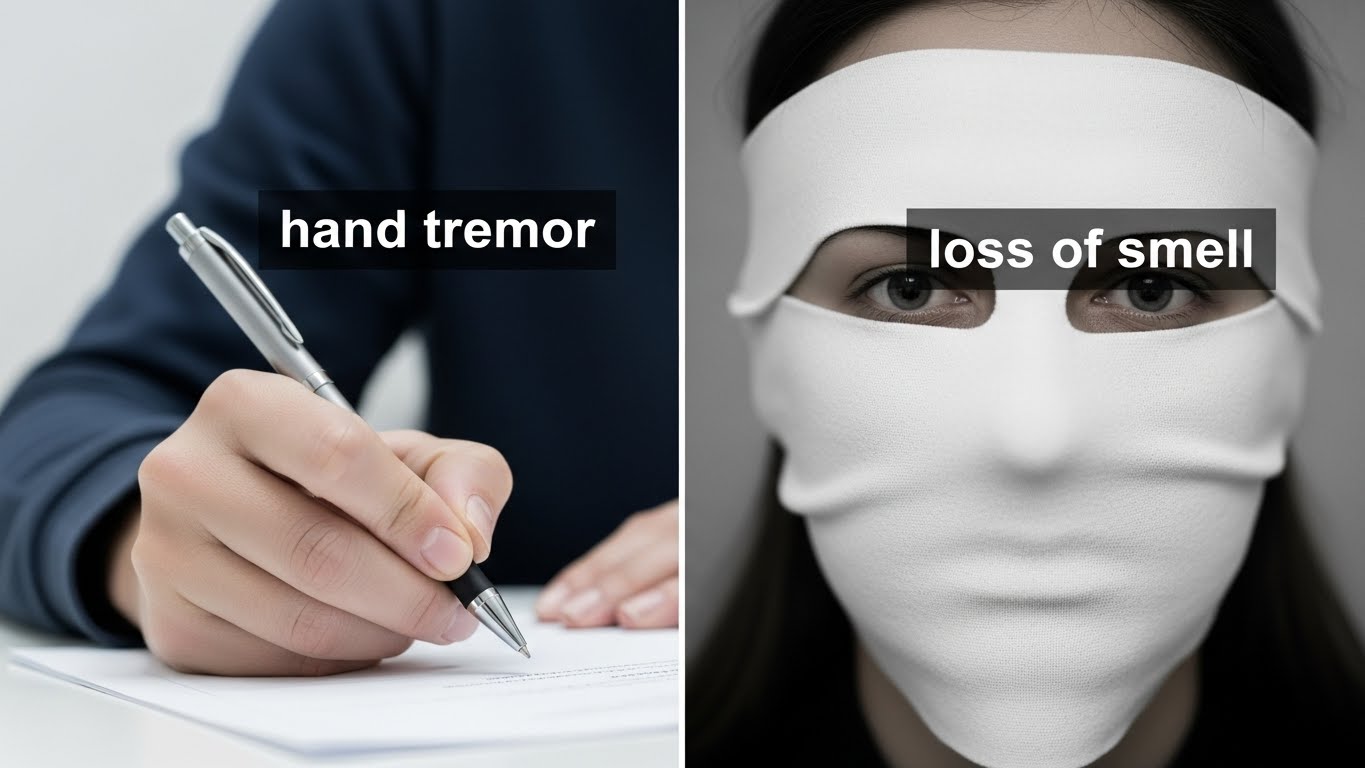
A tremor is a minor shake or twitch. It often begins in one hand. Your thumb may move while you are not using it. At first, it looks minor. You may attribute it to fatigue or stress.
But if tremors recur frequently, it may be an indication of something more. Tremor most commonly begins on one side of the body. They become more visible in a static hand position. These facts help doctors to distinguish Parkinson’s from other tremor causes.
2. Smaller Handwriting (Micrographia)
Writing may Click on Early Clues Although for many people, their letters appear smaller. Words become crowded. the effect of writing is so rigid. Doctors refer to this as micrographia.
You may see it while signing a cheque or composition of a memo. It may also be noticed by other members of your family. Because handwriting is such a personal thing, that’s one of the first changes people tend to notice.
3. Loss of Smell
Your smell perception reduces long before problems with movement. You might lose the ability to detect odors such as coffee, perfume or fresh flowers. This is not just aging. It is one of the first non-motor symptoms.
Smell loss can appear years before tremors, patents show. That’s why neurologists will ask about olfactory changes as a part of the screening for Parkinson’s.
4. Slower Movements (Bradykinesia)
The slowness of movement is referred to as bradykinesia. It makes daily tasks harder. You may take longer to dress. Walking may feel heavy. Easy tasks, such as brushing your teeth, can take longer.
This symptom is frustrating. It gives people the sensation of being trapped in their body. Unlike arthritis, the joints are not swollen. Instead it is the body’s inability to move fast at all.
5. Stiff Muscles
Windings generally are stiff in the early stages. The body is stiff, even at rest. Some people experience pain in shoulders or legs. Others record that their arms don’t swing properly.
Unlike symptoms in early rheumatoid arthritis there is no swelling. The stiffness is caused by muscle resistance, and not swelling. This helps doctors make the distinction.
6. Facial Expression Changes
A result of Parkinson’s, people then frequently lose facial expressive content. Their face appears blank or serious. Friends may assume that they are sad or upset. But inside, they feel fine.
Doctors refer to this as a “masked face.” It is caused due to lack of movement of the muscles in the face. This subtle change may occur years before being diagnosed.
7. Voice and Speech Changes
Your voice may become softer. Speech may sound monotone. Some people tend to droop off at the end of their sentences. You feel like you speak normally, but are asked to repeat.
Voice alterations are important clues. They are frequently present before tremors can be observed.
8. Sleep Problems
especially if they become troubled with sleep. You can kick, scream or move a lot while sleeping. Some people act out dreams. Others have difficulty sleeping quietly throughout the night.
Poor sleep has many causes. But when combined with tremors or rigidity, it is worth paying attention to.
Treatments may bring side effects. Be aware of neuropathy from prolonged chemotherapy and explore autoimmune pancreatitis treatment in children to support better care choices.
Why Early Symptoms are Important
Early detection will make all the difference. While there is still no cure, treatment can slow down progression. Medical professionals may use medications, physical therapy or lifestyle modifications.
Early detection is also useful for eliminating other alternatives. For example:
- Early symptoms of Alzheimer’s are about memory loss.
- Some less obvious symptoms of a heart disease include chest pain or exhaustion.
- First signs of thyroid cancer in women often include a neck lump.
- The first signs of pancreatic cancer can be demonstrated as stomach ache or yellow skin.
- Early warning symptoms of multiple sclerosis often begin with vision problems or numbness.
- Early symptoms of rheumatoid arthritis usually mean swollen joints.
Each ailment has its own initial indications. Parkinson’s is characterised by first changes of movement and muscle control.

Symptom Comparison Table
Here is an easy breakdown of the difference between Parkinson’s and other illnesses with similar early symptoms:
🔹 Early Symptom Comparisons
Alzheimer’s
Memory loss, confusion
Parkinson’s begins with movement, not memory
Heart Disease
Chest pain, breathlessness
Parkinson’s rarely causes chest symptoms
Rheumatoid Arthritis
Joint pain, swelling
Parkinson’s stiffness is without swelling
Multiple Sclerosis
Vision loss, numbness
Parkinson’s usually starts with tremors or slowness
Expert Insight
Experts emphasize that early cues can be minor. Dr. James Beck, a neurologist at the Parkinson’s Foundation, told Seeker that non-motor symptoms may show up well before tremors begin. Things such as lack of appetite, constipation or changes in mood are generally overlooked. But these are very critical markers.
The Michael J Fox Foundation notes that same. Their studies find that the onset of the symptoms that are not motor in nature can come a full 10 years ahead of a motor diagnosis. The knowledge of them will help to allow risk to be tracked and treatment initiated sooner.
Emotional and Cognitive Impairment
The very first symptoms of Parkinson’s disease involve something more than the muscles. Mood often changes. Depression is common. Anxiety increases. People can experience nervousness or lack of confidence.
There are also changes to the cognitive function. Focus can drop. Memory feels weaker. But unlike the early onset of Alzheimer’s, the decline is mild at first. Individuals recall events virtually normally but think more slowly.
Emotional shifts also impact on families. Loved ones experience personality changes. Understanding and patience becomes important here.
Everyday Challenges
ocene analogy: Minor stuffs expose the abyss. Dressing takes longer. Cooking feels harder. Writing down a grocery list is a tedious task. People say they live in the slow motion.
Speech is another hurdle. The communication is difficult when the voice is soft or flat. Friends might ask you to repeat the words. Talking becomes unnatural and can make social life shrink.
Walking becomes cautious. Feet shuffle. Balance feels weaker. Falls may occur at later stages. But even at early stages, walking loses its natural swing.
Lifestyle Effects
The first symptoms of Parkinson’s disease can affect work. Jobs that require quickness or coordination are more difficult. Typing, lifting, or public-speaking events may demonstrate the early formation of strain.
Relationships also change. Partners can become concerned about the future. Family members can feel stressed. Communication and support is key.
Hobbies can also fade. A musician may notice stiffness of the fingers. A painter can have a hard time controlling the brush. A little thing like that is emotional.
Misdiagnosis Risks
Parkinson’s gets confused with other illnesses. A stiff shoulder may be perceived to be arthritis. A tremor may be called stress. Constipation may be blamed on diet.
This is where comparing symptoms comes in handy. The early warning symptoms of multiple sclerosis usually include numbness or blurred vision. Parkinson’s doesn’t begin this way. First symptoms of thyroid cancer in women include a lump in the neck or change in voice. Parkinson’s voice change is not from growths, but due to muscle control.
Early signs of pancreatic cancer include jaundice or abdominal pain. Parkinson’s doesn’t start in the digestive system; it starts with the nervous system. Early signs of rheumatoid arthritis include swollen joints, but the stiffness of Parkinson’s does not have any swelling.
Armed with these differences, there is no more delay.
The Role of Doctors
Only a neurologist will be able to confirm the diagnosis. Tests may include movement exams, medical history and imaging. There is no definitive test for Parkinson’s. Instead doctors piece together clues.
Early visits are essential. Many patients wait too long. By that time symptoms may be advanced. Starting treatment early improves the quality of life.
Managing Early Symptoms
Medicine to begin treatment. Drugs substitute for, or mimic dopamine. These improve the slowness and stiffnesses. Physical therapy works to provide strength and balance. Speech therapy promotes easy communication.
Lifestyle matters too. Regular exercise allows muscles to remain flexible. A balanced diet helps energy. Sleep routines improve rest. These do not cure Parkinson’s, but mitigate the damage.
Family support plays a role. Family and friends can see small changes first. Promoting visits to the doctor is very important.
Staying healthy starts with awareness. Learn about lifestyle changes to prevent Alzheimer’s disease, the first symptoms of Parkinson’s disease, and the early signs of thyroid cancer in women to catch problems early.
Advantages and Disadvantages of Early Detection
Here’s a basic table to explain the value of early detection:
Practical Tip
If two or more of the signs are present, don’t waste time. For example, tremor + loss of smell. Or handwriting changes + stiffness. Studies now report that these combinations increase the risk of Parkinson’s.
Keep a symptom diary. Don’t forget to write down when changes occur. Share it with your doctor. This type of record is helpful in early diagnosis.
Looking Ahead
The initial symptoms of Parkinson’s disease may seem trivial, but they suggest big changes. Science is working on the new ways of identifying the disease earlier. Biomarker studies and genetic testing hold out promise.
And, for now, awareness is the best tool. Knowing what to look out for is power. The sooner it’s done the more chances you have to lead a more complete life.

How Doctors Diagnose Parkinson’s Disease
The initial symptoms of Parkinson’s disease are subtle. Doctors make use of thorough examinations. No single test confirms it. Rather, diagnosis is made based on a combination of history, symptoms and physical examination.
A neurologist will perform tests to check your reflexes. What You Need to Know: They are watching your walk, your handwriting, and your speech. They might inquire about changes in sleep, mood or smell.
Brain imaging can help rule out other causes. MRI scans are often normal with Parkinson’s. But they do help doctors rule out strokes or tumors. In some cases there is a special scan, known as DaTscan, which demonstrates the activity of dopamine.
Blood tests may be taken to rule out thyroid disease, vitamin problems or infection. This helps to avoid confusion with conditions such as first signs of thyroid cancer in women, which may also cause changes in voice.
Diagnosis is never rushed. Doctors may monitor the symptoms over a period of months. If the tremors or slowness worsen, then Parkinson’s becomes more likely.
Treatment Options
There is no cure yet. But many treatments are helpful in managing the condition.
Medication
The most common drug, levodopa. It is converted to dopamine in the brain. This helps to reduce tremors and stiffness. Doctors tend to pair it with carbidopa to avoid side effects.
Other drugs mimic dopamine. These are called dopamine agonists. They are effective in the initial stages. MAO-B inhibitors retard degradation of dopamine. They may help to delay the need for levodopa.
Therapy
Balance and strength are worked on through physical therapy. Regular movement eliminates stiffness. Exercises such as walking, swimming or yoga promotes flexibility.
Speech therapy is helpful for voice changes. Practicing Volume and Clarity Helps Communicate.
Occupational therapy works on daily living activities. Patients are taught new ways of dressing, cooking, or typing. Minor changes preserve independence.
Surgery
In end stage cases, deep brain stimulation (DBS) is an option. Doctors insert electrodes in the brain. A device for controlling the electrical signals is called. This reduces tremors and improves motion. DBS is not a cure, but an aid to the symptoms.
Lifestyle Choices
Daily choices also matter. Exercise is vital. “Just a little bit of activity helps lifting mood and activity.” Keeping the muscles flexible by taking walks or stretching exercises.
Diet plays a role too. Fiber rich foods prevent constipation. Balanced meals have balanced energy. Hydration helps to keep the body strong.
Sleep hygiene is important. A room that is quiet and dark will enhance rest. Going to bed at the same time every night helps.
Stress control adds value. Meditation, reading or soothing music has relaxing effect on the mind. Calming rituals can help reduce stress, as they have been found to make tremors worse.
Living With Early Parkinson’s
Life doesn’t end with diagnoses. Many people continue to live full lives for many decades. When treated early, deterioration is slowed. Support systems lighten issues and challenges.
Families can play a big role. Encouraging appointments, helping to track symptoms and providing emotional support all matter.
Work adjustments also help. Flexible hours, lighter duties or remote work allows independence to predators. Employers will frequently make accommodations when requested.
Connection is offered through community support groups. Talking with others on the same journey helps address the situation of isolation.
Common Myths
Many people assume that Parkinson’s always starts by shaking hands. But the earliest symptoms of Parkinson disease could have to do with smell, sleep, or mood.
Another myth is that it’s something that older people only get. While the risk increases with age, the younger adult population can get it as well.
Some feel life ends soon after a diagnosis. Indeed, many lead active lives for decades. Treatments are continuing to improve survival and comfort.

FAQs
1. What are Parkinson’s First Symptoms In particular, what are the very first symptoms of Parkinson’s disease?
The first signs are tremors in one hand, smaller handwriting, a loss of smell, stiffness, and slower movements. Some also experience trouble in sleeping or softness in their voice.
2. How is Parkinson ages first signs vs, Alzheimer’s, different?
Initially, Alzheimer’s symptoms include memory loss and confusion. The first symptoms of Parkinson’s disease begin with movement, tremor or stiffness.
3. Can Heart disease be mistaken for Parkinson’s?
Not usually. Subtle signs of heart disease such as chest pain, fatigue or shortness of breath. Parkinson’s starts with a change in muscles and movement.
4. Is there any connection between thyroid cancer and Parkinson’s?
They are different conditions. First symptoms of women developing thyroid cancer include such lumps on the neck or hoarseness. Parkinson’s voice changes aren’t caused by growths; they are of the muscles.
5. How Is RA Different Than Parkinson’s Stiffness?
Early symptoms of rheumatoid arthritis include joints that have become swollen and painful. Parkinson’s stiffness has no swelling to it. This feels like a resistance of muscles to moving things.
6. Does pancreatic cancer mimic Parkinson’s?
No. Early signs of pancreatic cancer are abdominal pain or yellowing (jaundice). The changes induced by Parkinson’s are not digestive but rather neurological.
7. How is Multiple Sclerosis Misdiagnosed as Parkinson’s?
Early warning symptoms of multiple sclerosis can include numbness and blurred vision. Parkinson’s usually begins with tremor, smell loss or slowness.
Conclusion
The early symptoms of Parkinson’s illness are often subtle. Tremors, stiffness, changes in handwriting or loss of smell maybe doesn’t seem like a big deal. But together they constitute a story.
Early detection will enable quicker treatment. It helps to rule out other illnesses such as Alzheimer’s, heart disease or thyroid. Early action also means that patients may have more control.
Parkinson’s is difficult, but not the end. With the help of medical care and lifestyle alterations and support, people keep on leading a meaningful life. Awareness is the first step.