



Navigating life with fibromyalgia can feel overwhelming. Creating a strong Fibromyalgia Support System is your most powerful tool for management. This guide is going to base you by the way: build that system, bit by bit. We will discuss all of the pillars of support that you need.
Your journey is unique. Your pain is real. We are here to help you find relief as well as get your life back under control. Let’s create your own individual Fibromyalgia Support System together, empowering you to go on to live your fuller life.
Managing daily challenges matters too. Tips for coping with type 2 diabetes fatigue and a routine to reduce arthritis knee flare-ups can improve comfort. Also, untreated atrial fibrillation can raise stroke risk, making timely care vital.
What Exactly Is a Fibromyalgia Support System?
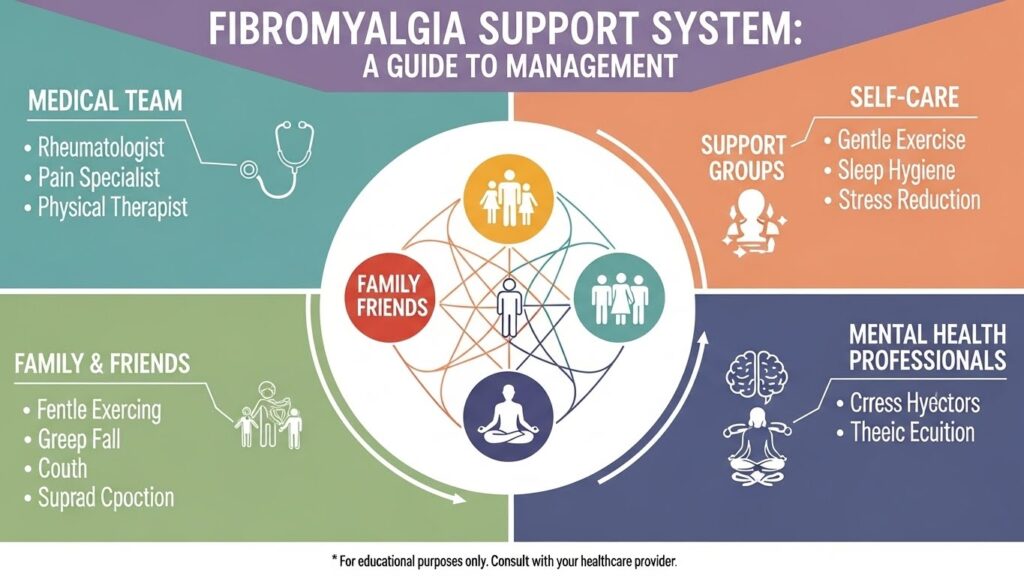
A Fibromyalgia Support System is more than just your doctor. It is an extensive network of people, tools and practices. This network collaborates with the aim of assisting you to cope with the symptoms and enhance your quality of life. You may call this your personal wellness team.
This system has 3 main pillars. The first is the medical team. The second is your circle of emotions and society. The third (and most important) is you. Your own self management strategies is the basis of a successful Fibromyalgia Support System.
Building Your Core Medical Team
Your number one step is in building a healthcare team that really understands fibromyalgia. This team will diagnose, help you in treatment and provide you with some guidance. You are the CEO of your health. Your doctors and your therapists are your expert consultants.
Hence, a proactive approach is so essential. Confirmations for appointments (Come prepared) Keep a symptom journal. Ask questions. A strong partnership with your team of physicians is one of the key factors in your Fibromyalgia Support System.
Finding the Right Specialists
Your primary care we as your primary care physician is your starting point. However, you will probably need the assistance of specialists. A rheumatologist frequently is leading the way when it comes to diagnosis. They can rule in other conditions such as arthritis or lupus.
You might also need:
- A physical therapy of movement therapy.
- A daily living adjustments occupational therapist.
- A specialist in managing pain.
The Role of Mental Health Professionals
Fibromyalgia is good at affecting your mind as much as your body. But typical anxiety and depression. A therapist can make an important contribution. They form a very essential element of your Fibromyalgia Support System.
Cognitive behavioral treatment of pain is very effective. A therapist is an individual that will teach you how to reframe your negative thought patterns. This can help to change your relationship with pain, and make it less severe in the long term.
The Power of Emotional and Social Support
You do not have to be alone when it comes to facing this. Emotional support of your family and friends is invaluable. They make you the Fibromyalgia Support System. You need people who’ll listen, believe you and offer help.
Educate your loved ones. Share articles and/or bring to an appointment. And the more they understand the better they’ll be able to support you. Clear communication helps avoid misunderstandings and strengthen relationships through communication.
Finding Your Tribe: Support Groups
Connecting with other people who understand is so healing. Look for local and/or on-line fibromyalgia support groups. Sharing experiences helps to reduce the feeling of being alone. This same understanding amongst all members is a special and powerful aspect of a Fibromyalgia Support System.
These groups are also great for sharing actual tips. You are able to get to know what has worked for other people. You may find some new treatments or ways to cope with your child that you did not think of.
Self-Management: Your Active Role in the Support System
You are the worst part of your Fibromyalgia Support System. Self-management includes the choices that you make on a daily basis. It is concerning your body and listening to what it says, responding to it with care. This includes diet, moving around and pacing.
Empowering yourself to the following strategies means that you will have a sense of control. It helps shift the focus away from leading pain-dominated life as a patient to being actively involved in your own wellness journey.
Nourishing Your Body: The Fibromyalgia Diet Plan
This food can have far reaching effects on your symptoms. While there is no “fibro diet” there are foods that a lot of people find relief by avoiding. Creating fibromyalgia diet plan is a Preventive Approach. It usually involves elimination diet to know what personal trigger foods are.


Frequent offenders are gluten, dairy and figure of artificial sweeteners. Focus on anti-inflammatory foods which are whole in nature. Imagine greens, fish fat and nuts and berries. Hydration is also key. Drink your full load of water all day long. A Well Planned Fibromyalgia Diet Plan can be a Game Changer.
🥗 Nutrition Guide: What to Eat & What to Limit 🍽️
Low self-esteem Keeps tracking of your symptoms: Your symptoms can be tracked by starting a food diary. Be sure to note what you eat and how you feel after eating it. This personal information is invaluable when creating your tailormade fibromyalgia diet plan and a strong Fibromyalgia Support System.
Gentle Movement for Pain Relief
When you are in pain, exercise may be the last thing on your mind. However, the correct type of movement is a medicine. It can help to decrease pain and stiffness. It also helps in improving the mood and moods along with a better sleep. Exercises for fibromyalgia that are gentle are a must.
Start slowly. The idea is coherence and not vigor. Activities such as walking, swimming and tai chi are good ones. So, always take your things to be sure by listening to your body and don’t put yourself through sharp pain. This consciousness causes exercise to be a long-lasting component of your Fibromyalgia Support System.
Step-by-Step Guide: Cat-Cow Pose
This is a gentle yoga post which will move the spine and can relieve back pain.
- Start on your hands and knees. Relax your wrists that are under your shoulders. Alignment points: Your knees should be aligned under your hips.
- Breath (Cow Pose): Narrow down your belly down on the floor. Lift your chin and chest. Gaze forward.
- Exhale( Cat pose): Round the spine towards the ceiling. Tuck your chin to your chest. Press the floor away.
- Keep on flowing between Cow while inhaling and Cat while exhaling.
- Repeat also 5 – 10 breaths following your own breath.
This is a simple exercise that is an excellent way to start your day. It gently wakes up your body. The results of daily practice make a big difference on your ability to be more comfortable.
Managing Energy and Avoiding Flare-Ups
A fibromyalgia flare-up is a short-term increase in the seriousness of symptoms. It can be triggered by stress, overexertion or sleeping problems. Scientists pointed to other brain changes in regard to study one of these factors was “learning to manage your energy is key to reducing the frequency and intensity of these flare-ups.”
This concept is referred to as “pacing.” And, it means activity and rest in balance. Avoid the “boom and bust” cycle. This is where you do it too much on good days and pay later. Pacing: it’s a skill and a critical component in your Fibromyalgia Support System. A study published in the journal The Lancet Rheumatology in 2023 has shown the importance of individualized and non-pharmacological strategies such as pacing in its new fibromyalgia management recommendations. Such guidelines are discussed further here.
Treatments may bring side effects. Be aware of neuropathy from prolonged chemotherapy and explore autoimmune pancreatitis treatment in children to support better care choices.
📓 Use a simple notebook or an 📱 app on your phone to help you track your day-to-day activities and energy levels. This helps you to know your personal limits. You can then plan your days better to stay within your “energy envelope” so it’s a real rather than imaginary Fibromyalgia Support System.
By being aware of your energy patterns you are able to make smarter choices. You know when to pull and when to push yourself. This is a cornerstone of living with fibromyalgia successfully and a requirement in self-awareness.
A Deeper Look into Your Fibromyalgia Support System
Building a strong Fibromyalgia Support System It takes getting down and dirty. It entails knowing of common pitfalls and specific symptom patterns. It also means having a high level of mental strategies to deal with the issues caused by a chronic condition.
This section will help you to perfect your approach. We shall see common mistakes people make. We will also touch over the presentation of symptoms which will empower you with the knowledge. A well informed patient is a powerful advocate for his or her own health.
Common Mistakes in Managing Fibromyalgia (and How to Fix Them)
Many people make similar mistakes at the time of first diagnosis. Being aware of these might help to save time and hate. It helps build a more effective Fibromyalgia Support System in the first place.
It is so important to avoid these common traps. And it puts you on a path of sustainable management rather than hope and disappointment.
Understanding Your Symptoms
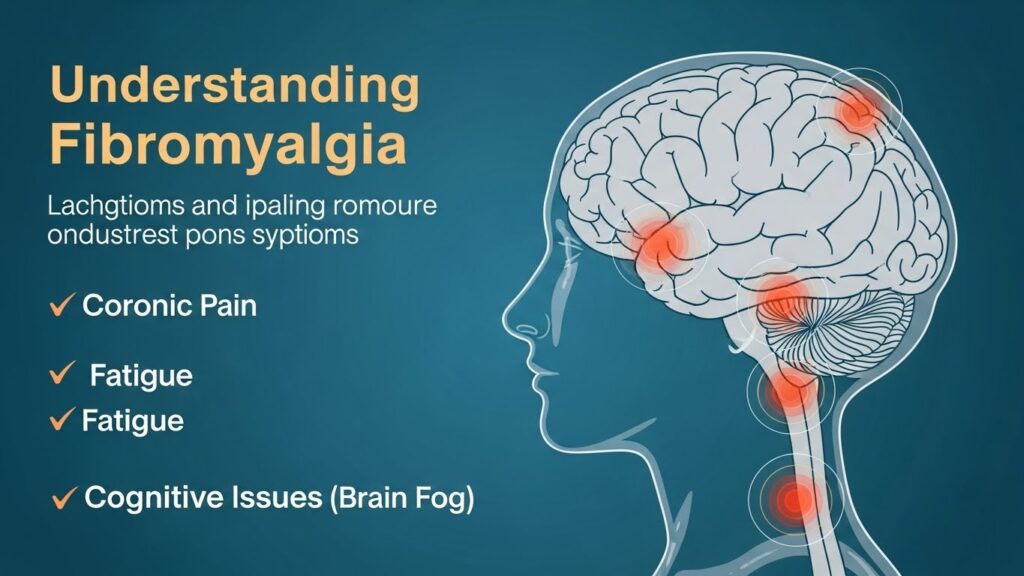
Fibromyalgia is a complicated syndrome. Its symptoms can vary widely. While the presence of widespread pain is the hallmark, there are many others. These include severe fatigue, mental problems (“fibro fog”), and sleep disturbances.
It’s also important to mention the prevalence of fibromyalgia symptoms in women. Far more women are diagnosed with the condition than men. They may also complain of more severe pain, morning fatigue and symptoms similar to IBS. Understanding the presence of these patterns can help to make a more proper and a well tailormade Fibromyalgia Support System.
Integrating Advanced Support Strategies
Once you have the basics down there are some advanced techniques that you are able to explore. These strategies have to do with the mind-body connection. They can be a great source of profound relief and are a good addition to any Fibromyalgia Support System.
The potent tools are mindfulness and directed breathing exercises. They help in regulating the nervous system. An overactive nervous system is often a factor associated with the heightened pain signals that are associated with fibromyalgia. Calming it down can have a direct way of reducing pain.
Mindfulness and Breathing for Chronic Pain Management
Chronic pain management is more than just about drugs. It has to do with altering the way that your brain perceives the pain. Mindfulness refers to the observation of the here and the present moment without evaluation. It can help you to disconnect from the experience of pain.
It is easy to kick-off with breathing exercises. They can be done on any occasion and in any location. They provide an instant feeling of calmness and control which is essential when coping with persistent pain. A good Fibromyalgia Support System should have the following mental tools.
Step-by-Step Guide: Box Breathing
This technique is utilized by soldiers and first responders in order to calm the nervous system.
- Sit well with your back erected.
- Exhale all the air in your lungs.
- Inhale slowly through your nose for a count of four.
- Breathing: Holding your breath, count to four.
- And, on then, exhale slowly out your mouth to the count of four.
- Breathe in the blank breath to the point of four.
- Repeat the cycle for 2-5 minutes.
This simple practice can be used to break the stress-pain cycle. It provides you a working tool to use for pain spike.
💡 Expert Quote 💡
“For people with fibromyalgia, then, mindfulness is not a matter of denying that pain is there, but transforming one’s relationship with that pain.”
By watching the sensations without any panic or fear, the brain 🧠 learns how to wake up the alarm signals less, i.e. reducing the found intensity of the pain.
Caring for individuals with pain and distress in the area there are, of course, various perspectives of how to interpret the disorder, however the main idea is that a pain complainer with difficulty falling asleep or wakefulness is not just any sleeper or any insomnia cases.
Incorporating mindfulness takes some practice. Start small. Even 5 minutes a day will make a difference. Here are a few tips:
- Use a guided meditation app.
- Application in the average process, such as washing of dishes.
- Pay attention to your breathing notice.
Such a practice is a foundation of an advanced Fibromyalgia Support System. It makes you powerful from the inside-out.
Living with Fibromyalgia: A Lifelong Journey
Acceptance of fibromyalgia as a chronic condition is a vital step of the mind. Living with fibromyalgia requires adjustment and the development of a new normal. Your Fibromyalgia Support System is NOT a temporary solution, it is a permanent institution in your life.
This journey will have good and bad ups and downs. There will be good days and there will be bad days. The idea is to be more good days than you are bad days. It is about becoming resilient and finding joy in spite of the challenges.
Creating a Sustainable Daily Routine
An uninterrupted routine is too stabilizing. Stability contributes to the well-intended mind and body. A good routine will consist of all the elements of your Fibromyalgia Support System.
Try to get up and go to sleep at the same time. Schedule in short intervals time of mild movement. Plan your meals in order to support your fibromyalgia diet plan. Most importantly, take some rest periods during your day. This is not laziness but an important management strategy.
Final Thought
Building your Fibromyalgia Support System is the one most important thing you should do. It reclaims your power. Heat improve your list of providing you with a network of care, knowledge and handy tools. Remember, that you are the center of this system.
What you choose and for what you choose to speak up matters most. Remind yourself to be patient and have a sense of self-pity, as you are creating a greater, tougher future with your Fibromyalgia Support System.
Staying healthy starts with awareness. Learn about lifestyle changes to prevent Alzheimer’s disease, the first symptoms of Parkinson’s disease, and the early signs of thyroid cancer in women to catch problems early.
Frequently Asked Questions (FAQs)
What is the first step in building a Fibromyalgia Support System?
The first step is getting an accurate diagnosis and finding that primary care physician or rheumatologist that you trust and can work with on your care for the long-term.
Can diet really make a difference for fibromyalgia?
Yes, for many people it can. While there is no one-size-fits-all eating plan, having an anti-inflammatory diet and/or knowing personal food triggers can make a huge difference to the symptoms, such as pain and fatigue.
How do I explain fibromyalgia to my family?
Talk about simple analogies, such as if we were going to describe what you should do, since your body is amplifying its u0022pain volumeu0022 to high. Provide reputable information provided other organizations such as the Mayo Clinic or the National Fibromyalgia Association which can make her know it is a true and complicated medical disease.
I’m too tired to exercise. What should I do?
Start incredibly small. Spend five minutes stretching subtly as you would in your living-room, e.g. the Cat-Cow pose. The idea is to break front of a circle of inactivity. Be consistent somehow: consistency is more important than intensity.
Are online support groups as good as in-person ones?
They can be. Online groups have an advantage of providing 24/7 access, and they connect you to a world community, which is awesome from the accessibility standpoint. In-person groups offer in-person connection. The ultimate puzzle is the one that depends on your personal preference and needs.